
The largest surprise the movie business has encountered in 2025? The return of horror as a leading genre at the UK box office.
As a style, it has notably surpassed past times with a annual growth of 22% for the UK and Ireland film earnings: £83.7 million in 2025, compared with £68,612,395 in 2024.
“Last year, no horror film reached £10m at the UK or Irish box office. This year, five films have,” says a film industry analyst.
The big hits of the year – a recent horror title (£11.4 million), another hit film (£16.2 million), The Conjuring Last Rites (£14.98m) and the sequel to a classic (£15.54 million) – have all remained in the multiplexes and in the public consciousness.
Even though much of the professional discussion centers on the unique excellence of certain directors, their achievements point to something evolving between viewers and the category.
“Viewers often remark, ‘This is a must-see regardless of your genre preferences,’” explains a content buying lead.
“These productions twist traditional elements to craft unique experiences, resonating deeply with modern audiences.”
But beyond artistic merit, the steady demand of spooky films this year implies they are giving moviegoers something that’s greatly desired: catharsis.
“Right now, there’s a lot of anger, fear and division that’s being reflected in cinema,” observes a film commentator.
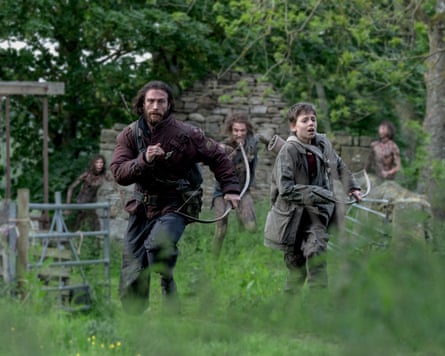
“Horror films are great at playing into people’s anxieties, while at the same time exaggerating them. So you forget about your day-to-day anxieties and focus on the monster on the screen,” explains a respected writer of vampire and monster cinema.
Against a global headlines featuring conflict, immigration issues, political shifts, and climate concerns, witches, zombies and vengeful spirits resonate a bit differently with viewers.
“It’s been noted that vampire cinema thrives during periods of economic hardship,” states an actress from a successful fright film.
“This symbolizes the way modern economies can exhaust human spirit.”
Historically, public discord has always impacted scary movies.
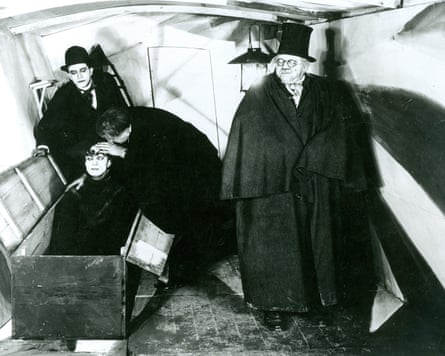
Experts highlight the rise of early cinematic styles after the WWI and the unstable environment of the post-war Germany, with features such as classic silent horror and a pioneering fright film.
Subsequently came the 1930s depression and classic monster movies.
“Take Dracula: it depicts an Eastern European figure invading Britain, spreading a metaphorical infection that endangers local protagonists,” notes a academic.
“Therefore, it embodies concerns related to foreign influx.”
The phantom of border issues inspired the recently released folk horror a recent film title.
Its writer-director clarifies: “My goal was to examine populist trends. For instance, nostalgic phrases promising a return to a 'better' era that excluded many.”
“Additionally, the notion that acquaintances might unexpectedly voice extreme views, leaving others shocked.”
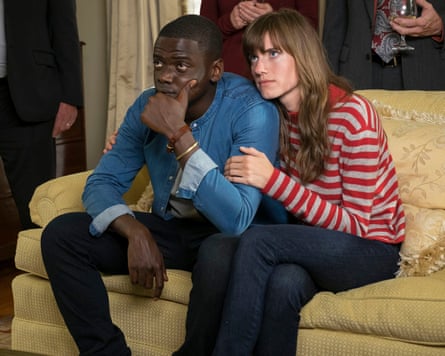
Maybe, the current era of celebrated, politically engaged fright cinema started with a clever critique released a year after a polarizing administration.
It ushered in a fresh generation of horror auteurs, including various prominent figures.
“It was a hugely exciting time,” recalls a director whose film about a deadly unborn child was one of the era’s tentpole movies.
“In my view, it marked the start of a phase where filmmakers embraced wildly creative horror with artistic ambitions.”
This creator, now penning a fresh horror script, notes: “Over 10 years, audiences’ minds have been opening up to much more of that.”
Concurrently, there has been a revival of the overlooked scary films.
Earlier this year, a new cinema opened in London, showing underground films such as The Greasy Strangler, a classic adaptation and the 1989 remake of Dr Caligari.
The fresh acclaim of this “rough and rowdy” genre is, according to the venue creator, a clear response to the algorithmic content churned out at the box office.
“It’s a reaction to the sanitised product that’s coming out of Hollywood. You have a film scene that’s more tepid and more predictable. A lot of the mainstream films are very similar,” he explains.
“In contrast [these alternative films] are a bit broken. It’s like they’ve erupted out of someone’s subconscious and been planted out there without corporate interference.”
Scary movies continue to challenge the norm.
“These movies uniquely blend vintage vibes with contemporary relevance,” notes an specialist.
Alongside the return of the mad scientist trope – with several renditions of a well-known story on the horizon – he predicts we will see scary movies in 2026 and 2027 addressing our modern concerns: about AI’s dominance in the near future and “monstrous metaphors in power structures”.
At the same time, a religious-themed scare film The Carpenter’s Son – which tells the story of holy family challenges after the nativity, and stars famous performers as the divine couple – is set for release soon, and will certainly create waves through the faith-based groups in the United States.</


